
What’s the Use of Spatial AI?
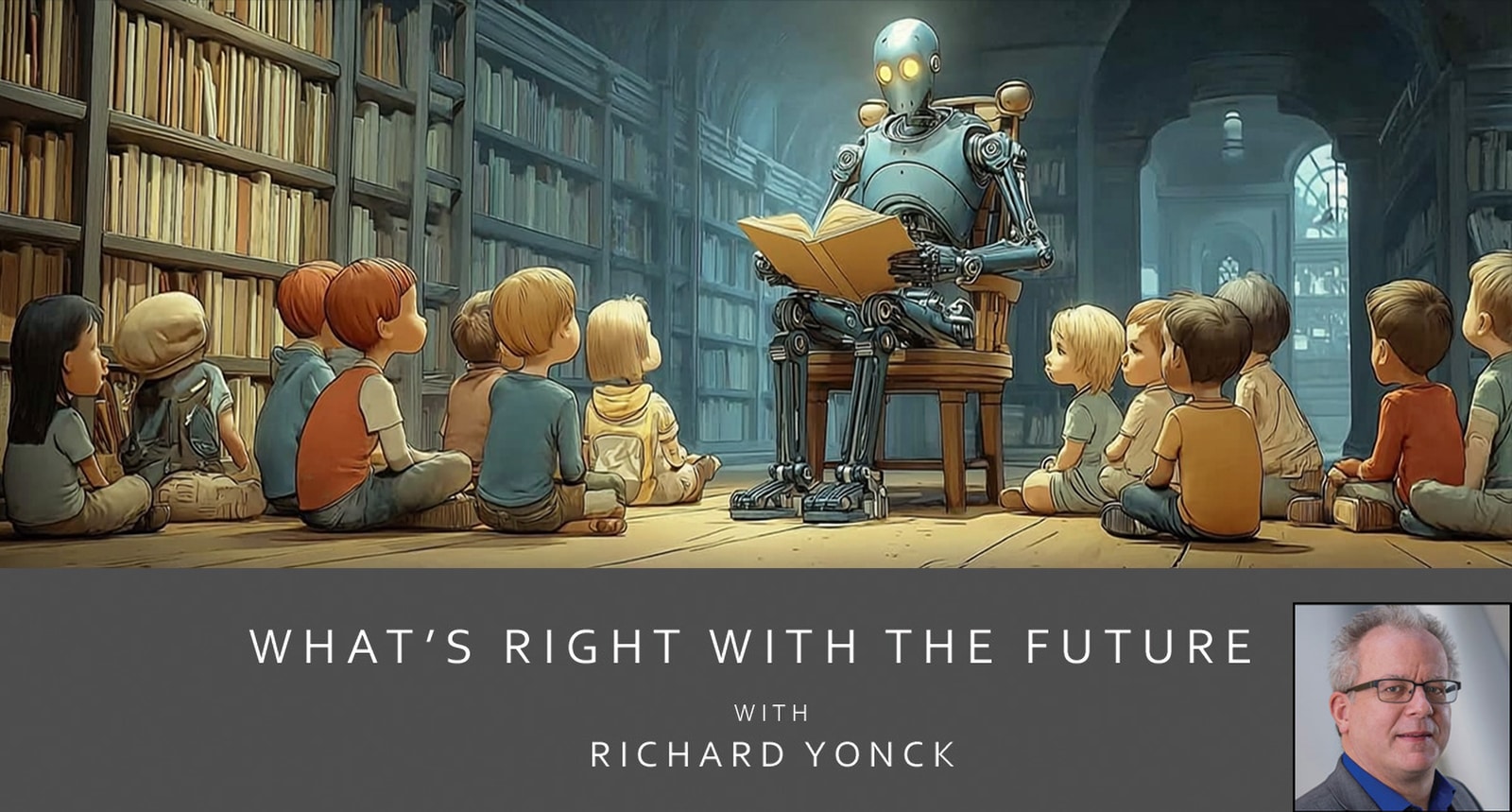
In the previous edition of “What’s Right with the Future?”, I discussed Spatial AI, a relatively recent approach for extending and improving artificial intelligence. Spatial AI marks a turning point in the story of AI, not because it makes pattern recognition systems faster or large language models more lifelike. Instead, it will allow our machines to be smarter in new ways, because it forces intelligence out of the abstract and into the world itself.
Once AI can perceive space—understand where things are, how they relate, and how they change—it begins to engage with reality much more like we do, rather than merely describing it. That shift sets in motion a cascade of probable use cases that will unfold over time, each stage expanding what it means for machines to share our environments.
What follows are some likely use cases across different time frames. While it’s tempting to say this or that capability will develop in five years or ten years time, I’m not going to quantify it. I’ve studied the field of AI long enough to know that it’s very difficult to know when a new process or breakthrough will actually occur. While we may find that incorporating AI into its own innovation cycle accelerates future development, I think that only supports my point.
The Near-Term
In the near term, Spatial AI will act like an attentive assistant. It won’t remake the world, but it will quietly improve how machines move through it. Robots will become less brittle, no longer requiring carefully controlled environments or rigid rules. They’ll become better at navigating cluttered warehouses, busy hospital corridors, and construction sites where unpredictability is the norm. Augmented reality systems can begin to overlay not just instructions, but context—highlighting the right components, warning of hidden hazards, adapting guidance based on a human worker’s position and progress.
These early applications are practical and incremental, yet they signal a deeper change. Intelligence will no longer be confined to screens and dashboards. It will be anchored to places, tasks, and bodies in motion. Systems can stop asking only “What data do I have?” and start asking “What is happening here?” This contextual distinction matters, because it marks the beginning of situational understanding rather than raw perception.
The Medium Term
As Spatial AI matures, its roles will likely expand to incorporate more coordination. Systems will begin to reason not just about space, but about time as well. They’ll consider how environments evolve, how people move through them, how actions ripple outward. Digital twins will emerge as living models rather than relatively static simulations. This will make these systems far more useful. A factory’s twin could reflect shifting workflows and human movement patterns in real time. A hospital’s twin might learn the rhythms of patient flow, staffing constraints, and spatial bottlenecks, allowing administrators to test decisions before they are made in the real world.
Mobility systems will undergo similar transformations. Autonomous vehicles and delivery robots would no longer behave as isolated agents following pre-planned routes. They’d be able to learn to negotiate shared space and deal with edge cases far more effectively. They’d anticipate human behavior, yield when appropriate, and coordinate with other machines without centralized control. The intelligence here would be less about optimization and more about coexistence. Machines would build and learn unspoken rules of movement similar to those humans intuitively follow, from recognizing personal space to social signaling.
This middle phase is where Spatial AI will begin to feel less like a tool and more like a collaborator. Decision-making would shift from retrospective analysis to anticipatory action. Instead of reacting to problems after they appear, systems would be able to sense emerging conditions and adjust behavior accordingly. The world they operate in would be viewed not as a series of snapshots, but as a continuous, flowing process.
The Long-Term
Over the longer term, Spatial AI will probably fade into the background, as so many other maturing technologies have done. This will mark its most profound impact. As intelligence is embedded in the spaces we inhabit, it will become ambient. Buildings might adjust themselves based on how people use them. Cities could respond dynamically to crowd behavior, energy demand, and environmental stress. Homes would sense changes in routine or movement patterns and adapt lighting, temperature, or assistance without explicit commands.
At this stage, Spatial AI will no longer be something we “deploy,” but a part of our infrastructure. As an invisible layer in our daily lives, it will mediate interactions between people, machines, and environments. The distinction between digital and physical will erode to be replaced by spaces that are responsive, adaptive, and context aware. Intelligence won’t be summoned on demand because it will already be present, quietly shaping the living and working environments around us.
This progression will also no doubt reshape the relationship between humans and machines. Early automation asked people to adapt to rigid systems. Spatial AI will hopefully reverse that dynamic. Machines will learn human norms—how we move, pause, gather, avoid, and collaborate. They will respond to intent inferred from posture and motion, not just our explicit input.
Yet this trajectory is not without tension. A world that understands space also understands behavior. The same systems that optimize flow and safety could be used to monitor, manipulate, or constrain. Spatial AI amplifies the importance of governance, transparency, and design choices that preserve human agency. Intelligence embedded in the environment must be accountable to the people who live within it.
What ultimately distinguishes Spatial AI from earlier waves of artificial intelligence is not technical sophistication, but orientation. It is intelligence that knows where it is. Intelligence that understands that meaning emerges from relationships—between objects, people, and places—rather than from data alone. It’s a move away from disembodied cognition toward something closer to lived understanding.
As Spatial AI continues to evolve, its most significant use cases may not announce themselves as breakthroughs. They will feel natural, even obvious, in retrospect. Spaces that work better. Systems that anticipate rather than react. Machines that share our environments without demanding constant attention.
Perhaps the story of Spatial AI is not about machines becoming more human. Maybe it’s about intelligence in all its forms, becoming more grounded in the world we actually live in.